RB-54876 axes

afdsfdsf
sdfdsfdsfdsfdsf
- Payload
- adasdas
- Reach
- 5

 ENGINEERING · MANUFACTURING · AUTOMATION
We design and integrate complete robot cells for palletizing, picking, assembly and handling that work with your existing machines and lines from day one.
We choose the robot type by payload, reach, speed and task, then design the complete cell around it.
sdfdsfdsfdsfdsf
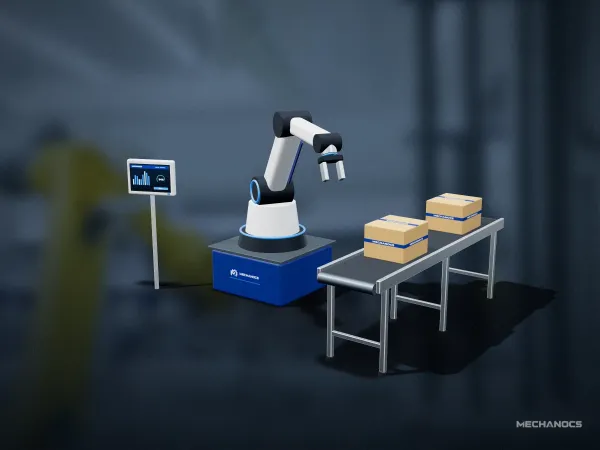
The most flexible: reaches any point and angle in its envelope, ideal for handling, welding and machine tending.

test
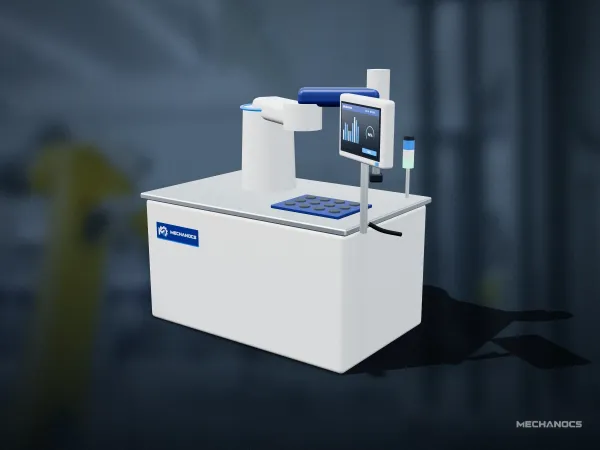
Fast and precise in the horizontal plane, ideal for assembly, insertion and table-top picking.
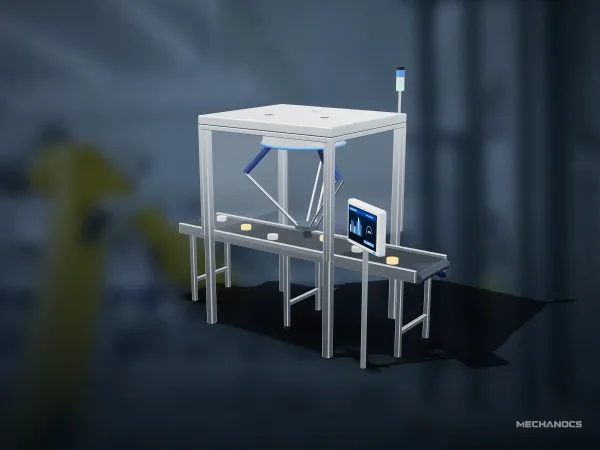
The highest picking speed over conveyors, for food, pharma and light packing.
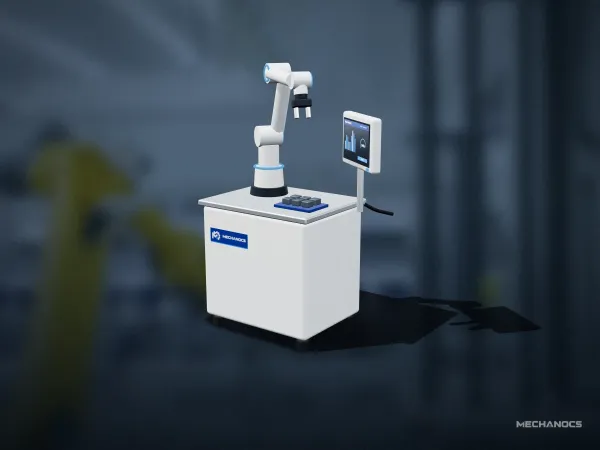
Works beside people with power and force limiting, and is easy to program and move between stations.
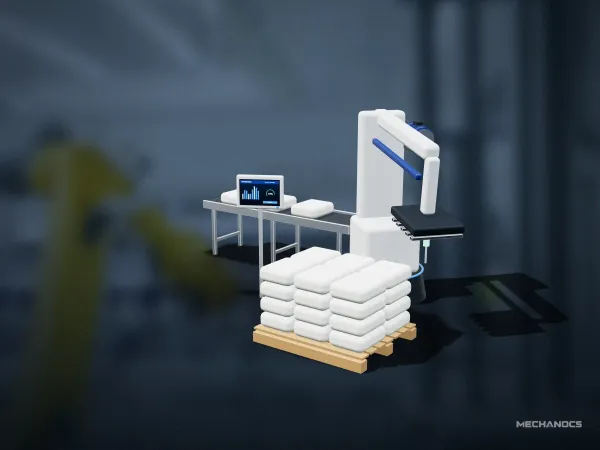
Built for the end of line: stacks bags, cartons and crates in fixed patterns at heavy payloads.
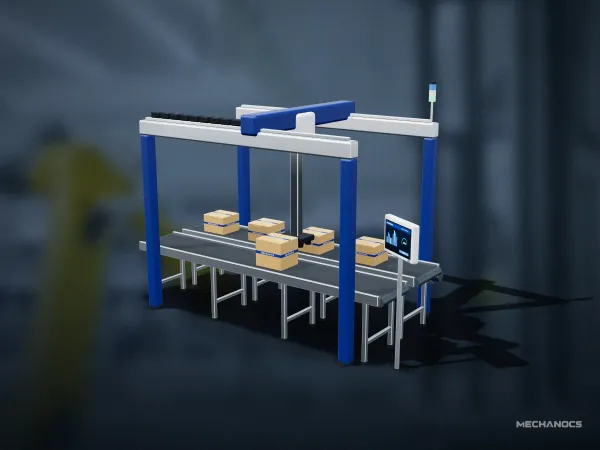
Precise linear motion over large areas, built to size for machine loading and large-part transfer.
Figures are typical market ranges. Final specifications are set after studying your application.
Repetitive, heavy and precise tasks are where robots belong, freeing your team for higher-value work.
Stack bags and cartons on pallets in fixed patterns, with no strain on workers.
Move products between conveyors and packs with repeatable speed and accuracy.
Load and unload CNC machines, presses and molds across every shift.
Arc and spot welding with consistent quality on every part.
Even coats and less material waste in environments that are hard on people.
Fit parts and drive screws at controlled torque, with every step logged.
Load products into cases and trays in a consistent layout.
Camera and gauge inspection with automatic rejection of faulty parts.
Answer three questions for an initial recommendation, then our engineers review it with you.
Pick your answers to see the recommendation here.
We handle everything around the robot: study, simulation, gripper, safety, programming and commissioning.
We analyze the part, target rate and floor space, and confirm the case for automation.
We simulate the cell digitally to confirm cycle time and reach before building.
We design vacuum, mechanical or magnetic grippers for your product.
Risk assessment, fencing, light curtains and safety-rated circuits.
We connect the robot to machines, PLCs, conveyors and monitoring.
On-site start-up, team training, maintenance and spare parts.
Every cell follows a documented risk assessment, with safeguards chosen for how people work around the robot.
Yes. You can start with one cell for a repetitive task, such as palletizing or machine tending, and expand later. Cobots suit limited spaces especially well.
It depends on complexity: from several weeks for standard cells to a few months for fully custom ones. We set the schedule after the application study.
In most cases, yes. We connect to your machines' control signals, or add control interfaces where needed.
We hand over the cell programmed and ready, and train your operators and maintenance team on daily running and product changeovers.
We compare the cell's cost with savings in labor, extra shifts, waste and injuries. Our economic consulting team can run this analysis with you.
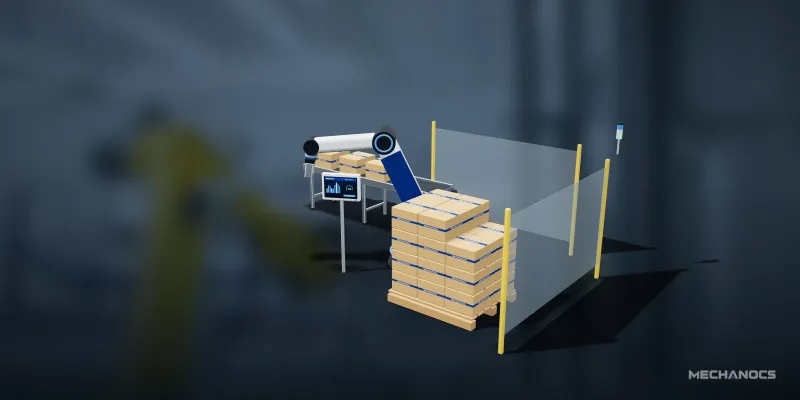
Send a short description of the task and output rate, and we will reply with an initial cell concept and next step.
Request a robot cell study